

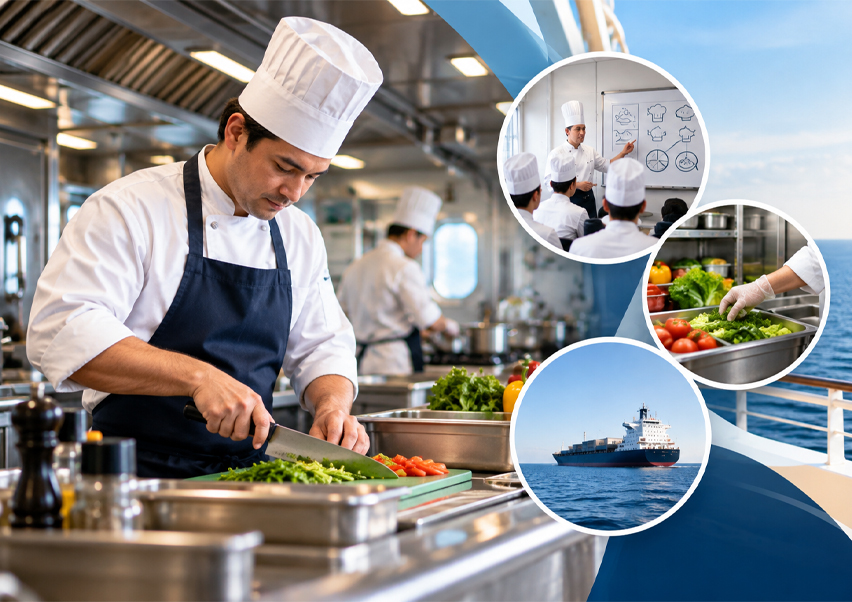
Working as a ship cook requires more than good cooking skills. Life onboard involves limited space, changing schedules, diverse crew requirements and strict food-handling procedures. Practical training before joining a vessel can help cooks understand these responsibilities and work more confidently from the start.
Ship cooks should understand how to organise a galley efficiently, including preparation areas, equipment, storage spaces and daily work routines. Good organisation helps maintain a smooth workflow during busy meal periods.
Training should reinforce safe food handling, personal hygiene, cleaning procedures and proper storage practices. Understanding temperature control and preventing cross-contamination are important when preparing meals for a full crew.
Ship cooks need practical knowledge of receiving, checking and storing provisions. Using FIFO (First In, First Out) helps ensure older stock is used first and supports better inventory control throughout a voyage.
A ship cook may prepare meals for people from different cultural backgrounds and with different dietary preferences. Training can help cooks plan suitable menus, manage available ingredients and maintain variety throughout a voyage.
Understanding how to minimise food waste and handle food waste according to vessel procedures is another important onboard responsibility. Good planning, portion control and proper storage can help reduce unnecessary waste.
Classroom knowledge is valuable, but practical exercises allow ship cooks to experience realistic galley situations before joining a vessel. This combination of knowledge and hands-on practice can make the transition to onboard duties much smoother.
For professional marine catering training, GSS Canada offers dedicated training facilities in Manila, Philippines and Mumbai, India, with programmes including culinary, housekeeping and Chief Cooks Briefing & Orientation training.
Disclaimer: This article is intended for general informational purposes only.


"Excellent collaboration, immediate response, and excellent effort to achieve the best possible…
"Thank you for the good communication with our vessel. I have no suggestions about the GSS, Global…
"As per the vessel's request, we received the provision list based on the items available locally…

Copyright © 2026 Global Catering Canada. All rights reserved worldwide.